Multimodal AI Models: Understanding the Language of Sight, Sound, and Text

Share
Forget typing! Did you know that it’s possible now to communicate with a computer beyond just text?
Multimodal AI Models can process and generate multiple forms of media simultaneously, including text, images, and voice commands, also called modalities. The ability to integrate information from various modalities enables these models to have a more comprehensive understanding of the world, similar to how humans perceive and interpret the environment around them.
Unlike Large Language Models (LLM), Multimodal Language Models are trained on vast datasets that contain not only text, but also image and audio data.
What makes multimodality that special?
Multimodal models incorporate multiple modes of input, hence creating a richer and more nuanced representation of data. That's very helpful In the case of a conversation, as understanding its context may require not just analyzing the text but also considering the tone of voice or facial expressions.
Did you know that multimodal models can even understand, explain, and generate high-quality code in popular programming languages like Python, Java, C++. And did you know that those models are able to generate insightful diagrams, wireframes, and visual elements that enhance UX clarity and user interaction. That’s basically the dream of every web developer and UX/UI designer. It is indeed making a revolution in web and app development. The app can as well be more natural and intuitive thanks to speech recognition and visual information display.
How do multimodal AI models function?
Those are some basic steps of how multimodal AI models function:
Data Processing starts with separately preprocessing each modality. For text that may involve many steps including:
- Tokenization : breaking text into words or phrases.
- Stemming/lemmatization : reducing words to their root form.
- Removing punctuation or stop words (common words like "the" or "and")
Image preprocessing could include resizing images to a standard size, normalizing pixel values, or converting them to a specific format, while audio preprocessing might involve extracting features like Mel-frequency cepstral coefficients (MFCCs) that represent the sound's spectral content.
Next is Feature Extraction which aims at understanding the data.
Text feature extraction is performed through converting words into numerical representations that can be understood by machine learning models. Those representations aim at capturing the semantic relationships between words, thus words with similar meanings will have similar numerical representations.
For images, feature extraction involves extracting meaningful visual features from the image, such as patterns and shapes.
There’s a very common technique called Convolutional Neural Networks (CNNs), that consists of multiple layers that learn to extract features at different levels of abstraction. Audio feature extraction involves analyzing the audio data and collecting the features that represent the sound's characteristics as they evolve over time, helping the model understand the flow and nuances of the audio.
The most critical step is Feature Fusion. It is the process of combining heterogeneous information from different modalities, which comes with a big set of challenges, such as different formats, different lengths, and non-synchronized data
The combined features, now a unified representation of the data, are fed into a powerful Machine Learning or Deep Learning Model. This model has been trained on a massive dataset containing multiple modalities.
The model learns the relationships between the features and the desired output.
For example, in sentiment analysis , the model learns how specific features extracted from text, image, and audio such as facial expressions in an image or tone of voice in audio correlate with positive, negative, or neutral sentiment.
Based on these learned relationships, the model can then make predictions or classifications.
Applications of multimodal AI models
Multimodal AI models have a wide range of applications across various domains.
Visual Content Analysis :
Multimodal AI models are widely used in image analysis, visual question answering, and caption generation. VCA utilizes computer vision techniques to analyze visual data. It involves tasks like object detection (identifying objects within an image), image classification (categorizing images based on their content), and image segmentation (breaking down an image into distinct regions).
Advanced Medical Diagnostics :
Multimodal AI can analyze medical images, patient records, and even doctors' spoken notes to better understand the diagnosis. This significantly enhances treatment precision and patient care.

Figure 1: The Future of Healthcare with AI
Autonomous Vehicles :
Autonomous vehicles rely on multimodal models to understand their surroundings, even the complex ones. They collect data related traffic conditions, road signs, and the vehicle's intended route from various sources such as cameras, LiDAR, and other sensors to make the final driving decisions such as when to accelerate, brake, or change lanes.
Combining camera images with LiDAR data for instance can help the vehicle identify objects and obstacles more precisely and prevent accidents.
Entertainment :
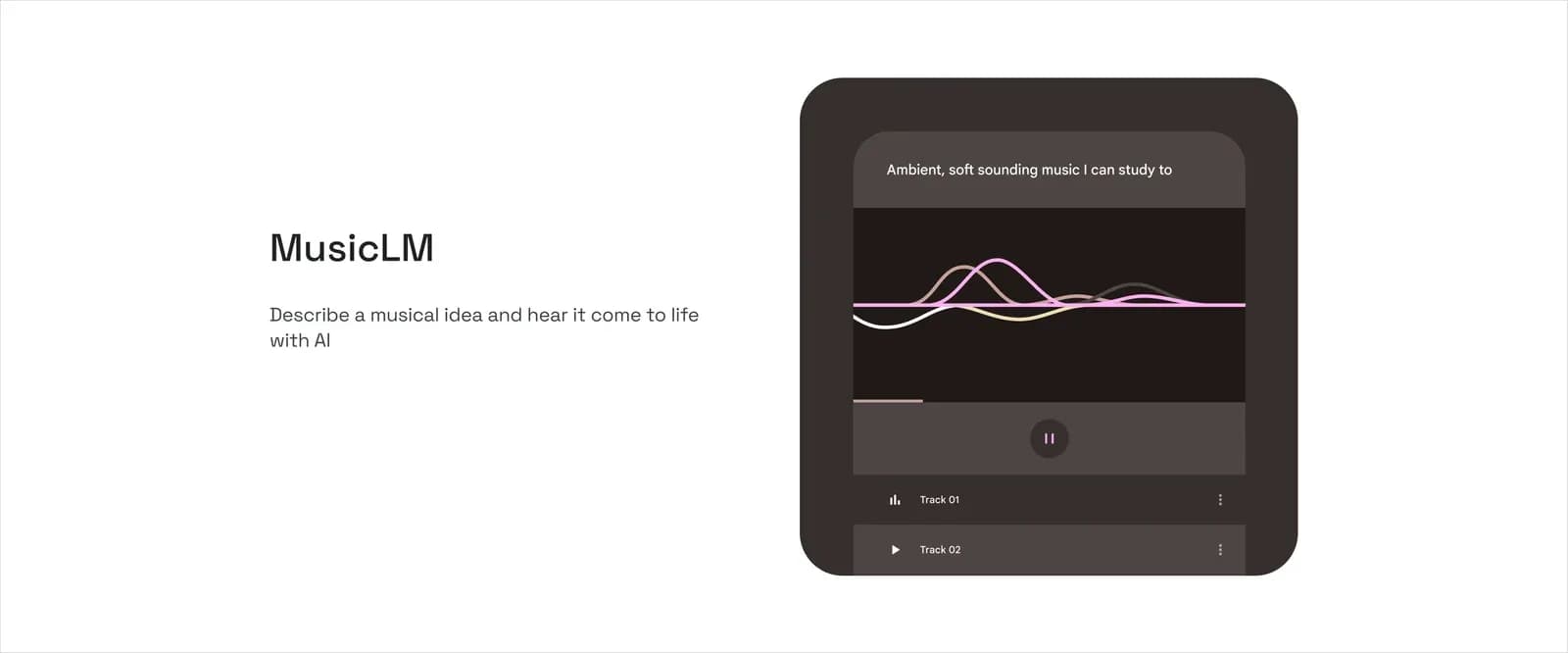
Take the example of MusicLM, which is a model from Google AI that can generate music based on text descriptions. That would be amusing for plenty of us to generate original musical pieces that capture our desired mood.
Figure 2: Music Generation with Google AI
Case Study: Meta AI Gets a Multimodal Boost with Llama 3
At the heart of Meta AI's latest update lies a powerful innovation: Meta Llama 3, an advanced multimodal AI model. This isn't just a fancy name, it means Meta AI can now understand and respond to your requests using not just text, but potentially also voice commands and even visual information. Meta AI’s assistant is available on Instagram, WhatsApp and Messenger as your right hand.
You can access real-time information from different channels without the need to exit the Meta app.
Think about it! Imagine asking Meta AI to recommend a restaurant with a beautiful sunset view, and having it not only search for restaurants, but also use image recognition to find pictures with stunning outdoor seating.
This multimodal approach makes Meta AI a more versatile assistant. It allows Meta AI to grasp the nuances of your requests and deliver even more helpful results. Meta's commitment to multimodal technology positions Meta AI at the forefront of intelligent assistants, constantly evolving to better understand and serve your needs.

Figure 3: Mark Zuckerberg announcing the new Meta update
Challenges
Multimodal AI models face challenges regarding data collection. To train such models, you’ll need vast amounts of labeled data. This process is expensive and time-consuming to collect and annotate. And since multimodal AI models often deal with sensitive data like images, voices, and text, this raises some privacy concerns.
After the data collection, data is combined from different modalities into a unified representation that captures the relationships between them. Multimodal models need to handle the inherent differences in data formats and intensities of noise. However, multimodal AI models can inherit biases present in the data they are trained on. Thus, it's crucial to develop techniques to mitigate bias and ensure fair outcomes for all users.
Furthermore, most multimodal AI models lack interpretability and transparency, making it difficult to understand how they make decisions and limiting their use in certain applications.
Another challenge that I always think about, how would AI models keep up with the evolving way humans communicate and interact. How would they be trained to be flexible to these changes and maintain their accuracy. I think the upcoming days will acknowledge us!
While multimodal AI offers incredible potential, there are still challenges to overcome. Can AI ever truly understand the complexities of human communication, or will there always be a limit?
FAQs
How do multimodal ai models differ from unimodal models?
Unimodal AI models often focus on processing data from a single modality, such as text or images. Multimodal AI, on the other hand, can process and generate multiple forms of media simultaneously.
In summary, how do multimodal AI models work?
Multimodal AI models preprocess each modality separately. They then extract features from each modality and fuse them to create a unified representation. The final step is analysis and decision-making.
How can individuals prepare for the future of Multimodal AI?
Individuals can enhance their skills in data analysis and machine learning, learn programming languages like Python, and stay updated with the latest developments and trends in AI.