Transform Your Consulting Service into a Scalable Startup Product

Share
When offering consulting as a service, your business typically operates on a one-to-one model: you trade your time and expertise for money. While this approach can work, it can limit your growth since the revenue is directly tied to the hours you can work. On the other hand, transforming your consulting services into a startup product offers the potential for exponential growth. A startup is typically defined as a company built with the intention of scaling quickly, often reaching thousands or even millions of users. The key difference lies in productizing your services—taking what was once manual and labor-intensive and turning it into a SaaS (Software as a Service) product that automates these services.
For example, a consulting service that once required manual input can become a SaaS solution that helps thousands of users by offering automated insights or tools, requiring little direct intervention. This transformation enables startups to achieve a high growth rate, potentially onboarding thousands of users or more in a short amount of time.
Why Productizing Consulting Leads to Startup Growth
Traditional consulting businesses operate on a time-for-money model, where growth is limited by the number of hours you and your team can work. By turning your consulting services into a SaaS product, you can serve a virtually unlimited number of clients, without the need for direct input for each engagement.
For instance, if you’re currently consulting on digital marketing strategies, your SaaS product could automate marketing analysis and recommendations, allowing users to get real-time insights without requiring one-on-one consulting sessions. This model allows you to scale quickly and focus on growing the user base rather than the number of consulting hours.
A startup product offers:
- Automation of previously manual processes.
- A scalable model that isn’t tied to hours worked.
- The potential to serve hundreds, thousands, or even millions of users.
Success Stories:
Tony Tran (Lumanu):
Initially working as a marketing consultant, Tony charged clients hourly for his influencer marketing expertise, earning around $5,000 to $10,000 per month. By transforming his service into Lumanu, a SaaS platform, he created a product that now generates revenue based on a subscription model. With a starting user base of 1,000 users, each paying $50 per month, Lumanu generated $50,000 in monthly recurring revenue, quickly surpassing his previous consulting income. As Lumanu scaled to 20,000 users, monthly revenue exceeded $1 million, far outpacing what he could have earned as a consultant.

Figure 1: Lumanu logo
Melanie Perkins (Canva):
Melanie was a design coach who could only serve a limited number of students at a time, earning around $1,000 to $2,000 per month. After creating Canva, the platform grew exponentially, with millions of users. Assuming 100,000 paying users on a $10 per month premium plan, Canva generated $1 million in monthly recurring revenue. This exponential growth, from a few thousand dollars as a coach to millions in revenue, would never have been possible through one-on-one consulting.
Figure 2: Canva logo
David Hauser and Siamak Taghaddos (Grasshopper):
As consultants for small businesses, David and Siamak were limited to an income of around $10,000 per month. After launching Grasshopper, a virtual phone system for businesses, the company scaled rapidly. With 1,000 businesses paying $30 per month, Grasshopper generated $30,000 in monthly recurring revenue. As the platform expanded to 30,000 users, monthly revenue reached $900,000, far beyond what they could have achieved through their consulting work alone.

Figure 3: grasshopper logo
Essential AI Features for Your Startup MVP
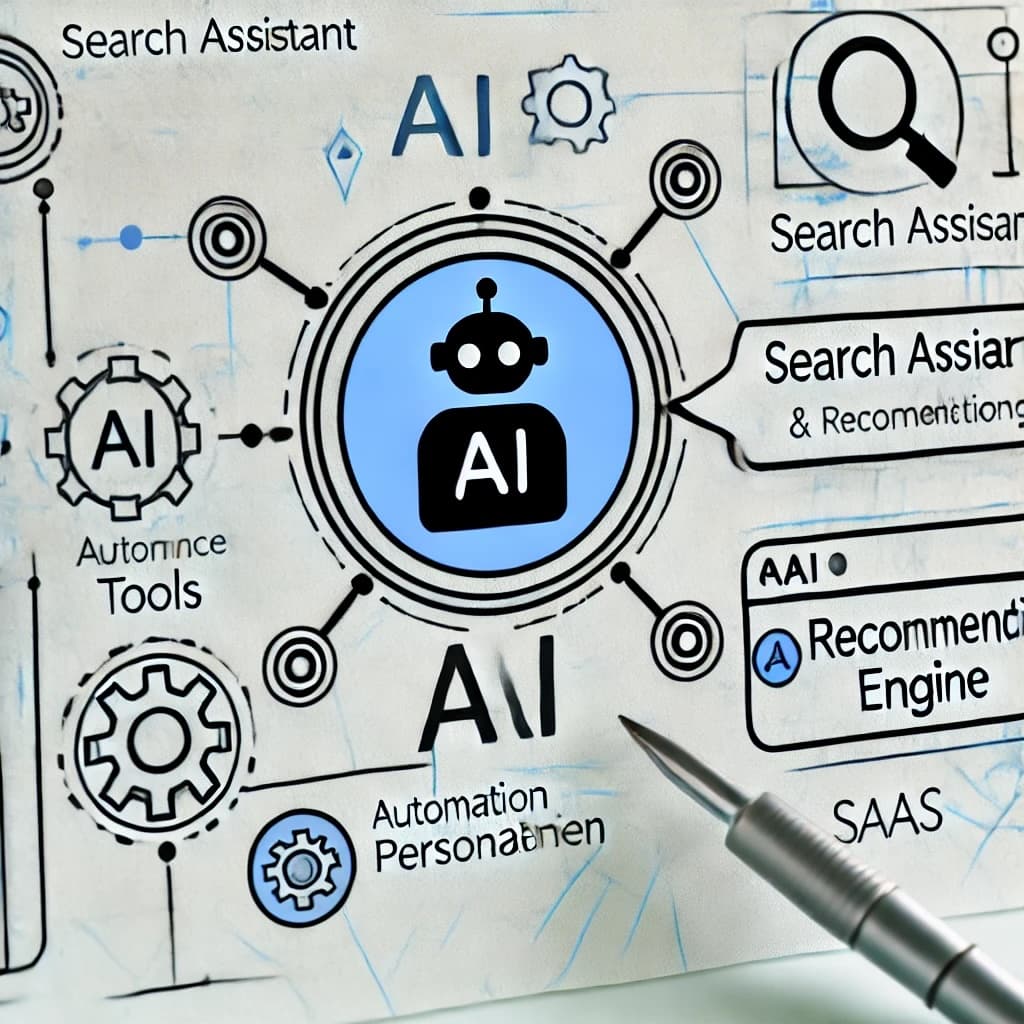
When transitioning from consulting to a SaaS model, integrating the right AI-driven features can make your product more engaging, scalable, and user-friendly. Here are two key features that can drive success:
AI Search Assistant:
A sophisticated tool that understands the context and nuances of user queries, delivering highly accurate search results. Whether your product is built for e-commerce, content, or SaaS, having an intelligent search function is critical for user engagement. In an MVP, this feature enhances the user experience by providing relevant, context-aware search results, improving retention and satisfaction from the very beginning.
AI Natural Recommendation:
This engine predicts what users are searching for, even if they haven’t explicitly requested it. It recommends products, content, or actions based on user interests and behaviors, driving engagement and conversions. For startups creating an MVP, this feature ensures users are constantly presented with relevant, personalized content, reducing the likelihood of them leaving the platform due to lack of meaningful engagement. These features, working together, create a smart, personalized user experience that anticipates needs and delivers solutions seamlessly.
How
Building a scalable product requires more than just an idea. Without technical expertise, it can be difficult to bring that idea to life. However, by integrating intelligent AI tools, you can create a product that serves your users effectively while allowing you to grow your business quickly.
By leveraging AI-powered features like Search Assistants and Natural Recommendation Engines, you can:
- Reduce development time by using intelligent features that make your product more engaging and intuitive.
- Improve user retention and satisfaction through personalized experiences that keep users coming back.
- Scale your product quickly, as these features allow you to serve a large number of users with minimal manual input.
Achieving Exponential Growth with the Right Features
Startups are built to scale quickly, and AI-driven features are designed to support this growth. Whether you’re automating your consulting services into a SaaS platform or building a marketplace solution, having the right set of tools allows you to manage everything from product development to user engagement. With this approach, you can reach and serve thousands of users while maintaining the quality of service that consulting clients expect.
Conclusion:
The transformation from a time-bound consulting service to a scalable startup product is not only possible but can also unlock exponential growth. As we’ve seen in the success stories of Lumanu, Canva, and Grasshopper, turning manual services into automated solutions leads to increased reach and recurring revenue streams.
If you’re considering making this shift, you don’t need to reinvent the wheel. AI features provider like OLINDIAS can help turn your service into a scalable SaaS product. From search assistants to recommendation engines, these features are designed to enhance your user experience and ensure you can scale rapidly, all while maintaining the quality of service your clients expect.
Ready to begin your journey?
Explore OLINDIAS’ AI features to see how they can support your transformation. If you’re seeking personalized guidance to start your journey, book a free 1-to-1 meeting for tailored advice. Don’t let procrastination hold you back—take the first step toward seamlessly transforming your service into a scalable startup.